| |
|
|
Therapeutic Exercise (Pilates-based)
Physical exercise has always been considered essential to health. However, a personalised, Pilates-based, therapeutic exercise regime can bring a new dimension to your activity. It will speed your recovery and reduce the chances of any problems recurring in the future. Performers and sports people often find that the 'fine-tuning' results in better technique and improved performance.
Why is this style of exercise called 'Pilates'?
Joseph Pilates was born in Germany in 1880. A sickly child, he determinedly trained himself in body-building and gymnastics. Eventually he became a physical training instructor for the police in both England and Germany.
In 1923 he emigrated to the USA and set up his first studio in New York. This was an immediate success with dancers such as George Balanchine and Martha Graham, becoming regular clients. Over the years, Joseph Pilates trained only a small number of instructors. Two of these instructors eventually taught Alan Herdman, who introduced the Pilates method to the UK in the 1970's. His original studio was at the London School of Contemporary Dance, and it was here that Margaret Papoutsis' late husband, Demetri, worked as an osteopath alongside Alan and several subsequent Pilates instructors. Margaret Papoutsis, herself, later took over this position and spent a number of years immersing herself in the finer points of the technique.
Menu
What does it entail, and why is it different from other exercise systems?
Most exercise systems concentrate on developing the large muscle groups in the body - making thighs bigger and arms bulkier. Along the way, many of the smaller, postural muscle groups are ignored and become weaker. These core muscles are now recognised as being vitally important in the maintenance of a strong erect posture, and for the protection of the neck and lower spine.
Pilates exercise targets these less obvious muscle groups, improving posture, co-ordination and strength. The 'core stability' of the torso improves, stomach flattens and limbs develop length and flexibility. Although the technique was originally popularised by dancers, it has become recognised as one of the world's most versatile exercise methods, suitable for almost all ages and body types.
Menu
How is this attained?
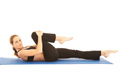
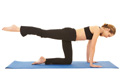
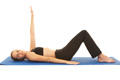
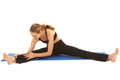
Specific exercises are designed to work these important areas - they are often small movements performed with great accuracy, and need a high degree of concentration and correct breathing. Areas not involved in the action are kept in a relaxed state, and great emphasis is given to the use of abdominal and pelvic floor muscles. It often looks so easy - until you try it yourself!
Margaret Papoutsis has developed her own unique therapeutic approach which provides an accessible and personalised regime for every patient. She understands that whilst most individuals accept that regular exercise is a vital part of their recovery and maintenance plan, nevertheless few people will continue with a time-consuming or complex exercise regime once they are free from pain. However, an individually prescribed and instructed set of only 3 or 4 exercises will often be continued indefinitely.
Pilates exercise was always intended to be a one-to-one system, particularly during the learning phases - it is extremely difficult to teach the focussed breathing and concentrated movements to a whole group of people at one time. However, once the basic principles of co-ordination, breathing and core stability have been mastered, many patients will find that they can return to Pilates group classes and benefit in a way which was not evident prior to their individual instruction.
Menu
Is the exercise taught during a normal treatment session?
In most cases the exercises will be prescribed and taught as an integral part of the osteopathic treatment.
It is sometimes advantageous to participate in a number of exercise-dedicated sessions if there is a particular goal in sight:
- Building strength and flexibility after injury or surgery
- Improving dance technique and stamina
- Regaining pre-baby figure and posture
- Training for triathlon, and other sports
Menu
Are there any side-effects?
After any effective exercise session, you should expect mild muscular discomfort the following day or two. Anything more serious should be discussed directly with Margaret Papoutsis.
Menu
Contraindications
Very few conditions will be aggravated by properly executed exercises of this type. Any potential contraindications will be discussed beforehand.
Menu
Dress Code
Men: shorts or closed front, close-fitting underpants/swimming costume.
Women: bra or crop top, and pants or shorts
If you have any concerns on this matter please contact the practice for further guidance.
Menu
Fees
1 hour £82
½ hour £62
We now can accept Debit and Credit Card payments.
Menu
Top
|
|
|
|